Personal Dashboard
LiveA fitness and habit tracking dashboard combining manual daily logging with automated Garmin health data sync. Built as a full-stack Next.js app with a Python FastAPI sidecar for wearable integration.

I'm a Naval Officer based in Seattle, WA, currently serving as an Officer Recruiter with Naval Talent Acquisition Group Pacific Northwest. Previously, I was assigned to the USS Charlotte (SSN 766), a fast-attack submarine homeported in Pearl Harbor, HI. I hold an M.S. in Mechanical Engineering from Massachusetts Institute of Technology and Woods Hole Oceanographic Institution (2022) and a B.S. in Robotics and Controls Science Engineering from the U.S. Naval Academy (2020). My graduate research focused on improving the sensing and navigational capabilities of autonomous underwater vehicles. I'm also building my skills as a full-stack software engineer, working with Next.js, Vercel, Supabase, and modern web tooling.

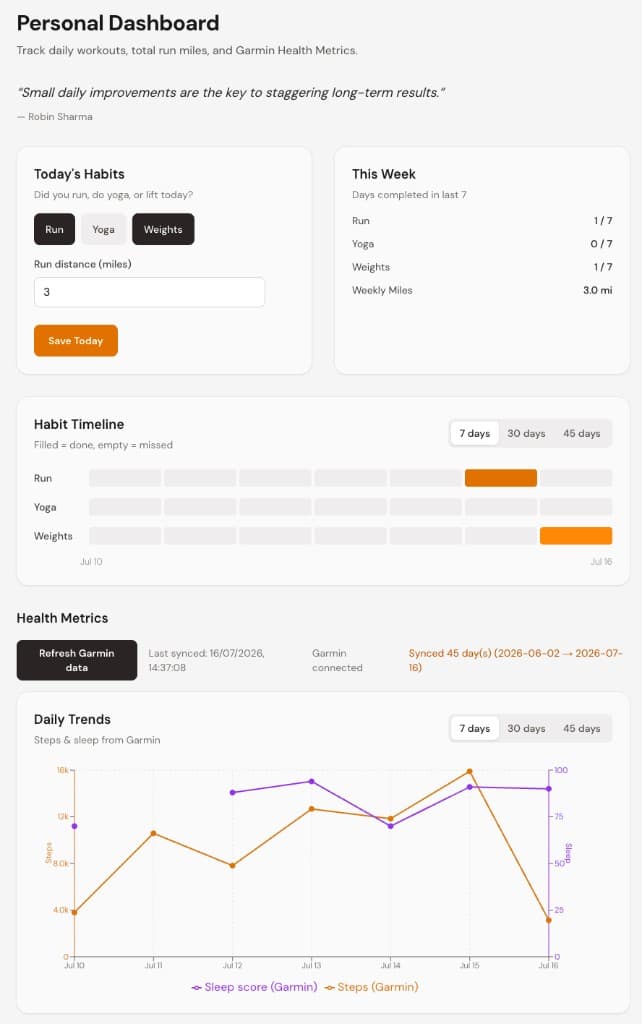
A fitness and habit tracking dashboard combining manual daily logging with automated Garmin health data sync. Built as a full-stack Next.js app with a Python FastAPI sidecar for wearable integration.

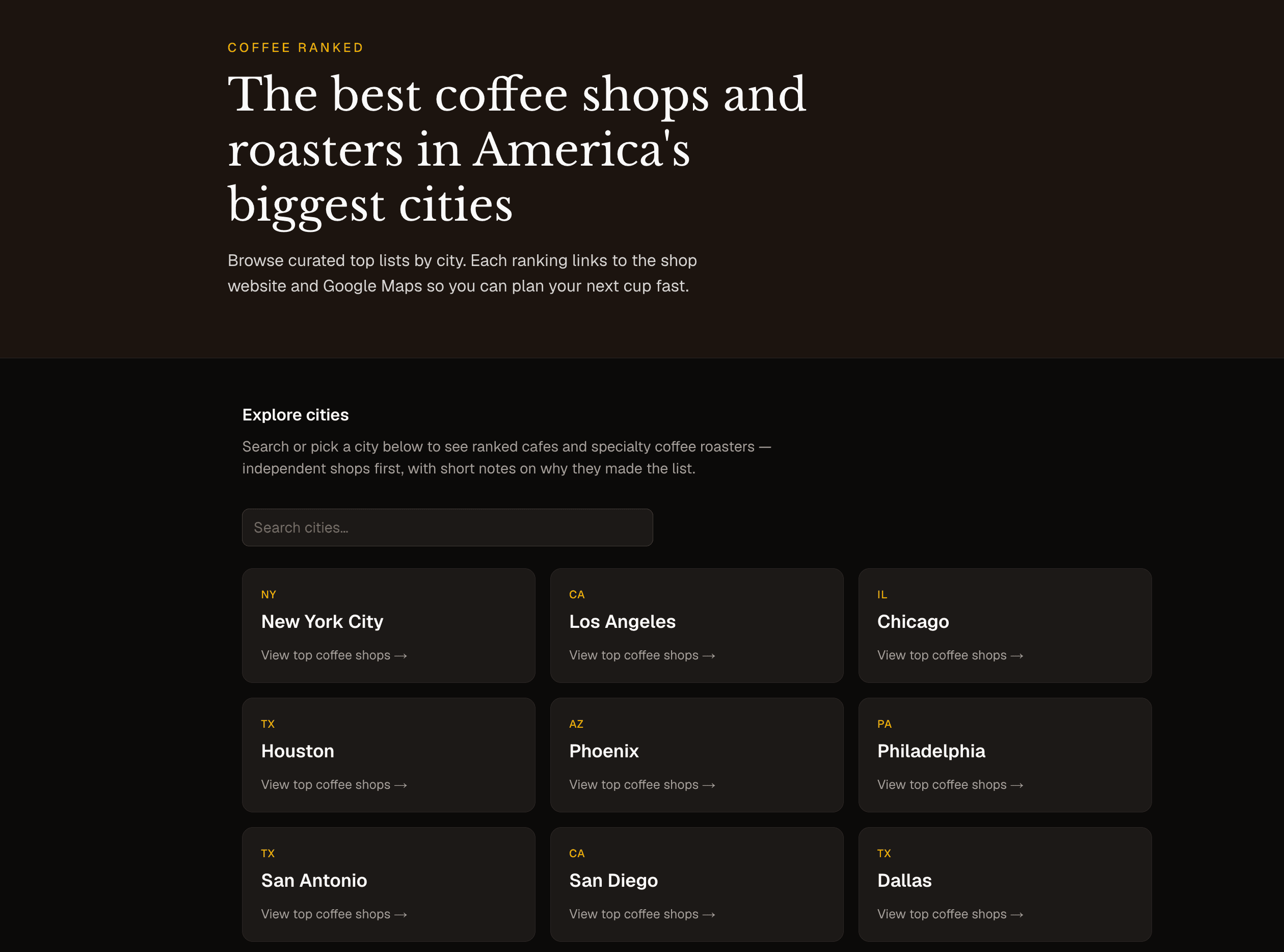
A platform to discover, rank, and share favorite coffee shops. Frontend foundation with route-level SEO metadata and planned locator and account flows.

Early-stage web app scaffold for a therapy groups directory, built to practice React, Next.js, and SEO-driven content.
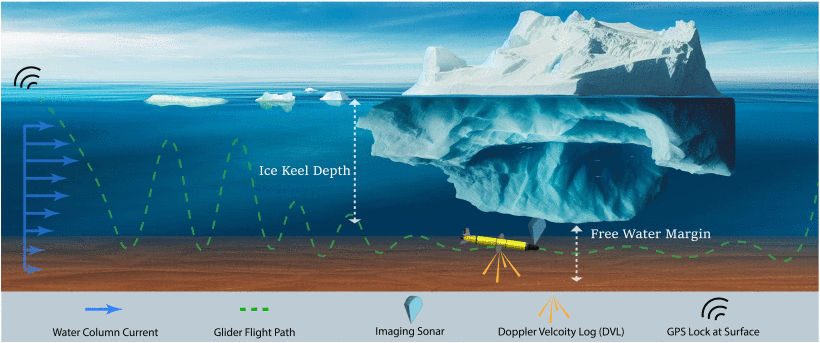
Georeferenced subsurface survey is primarily conducted by autonomous underwater vehicles and remotely operated vehicles that require power-intensive navigation suites, acoustic beacons, and surface support vessels with attendant operations teams onboard. The significant infrastructure required to operate vehicles conducting surveys in remote regions (e.g., under ice) poses increased challenges and remains prohibitively costly, leading to sparse coverage. Unattended operations using autonomous underwater gliders (AUGs) with low power, high-resolution onboard navigation holds promise in scaling up coverage while significantly reducing the operational costs of georeferenced surveys. In this article, we present a modified AUG equipped with a low power embedded navigation process and results of unattended sonar acoustic surveys using this experimental platform.
Read paper →
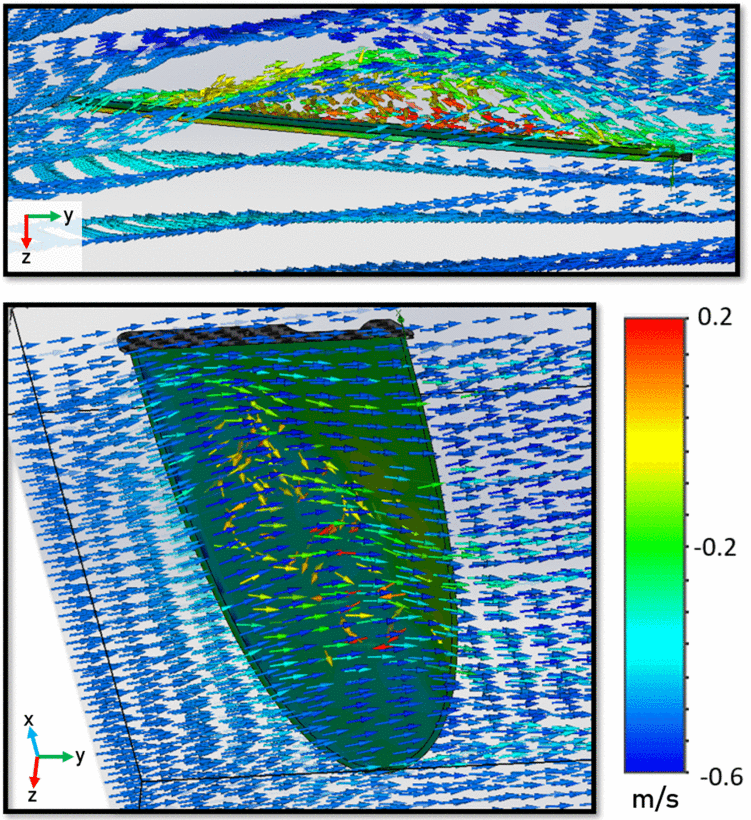
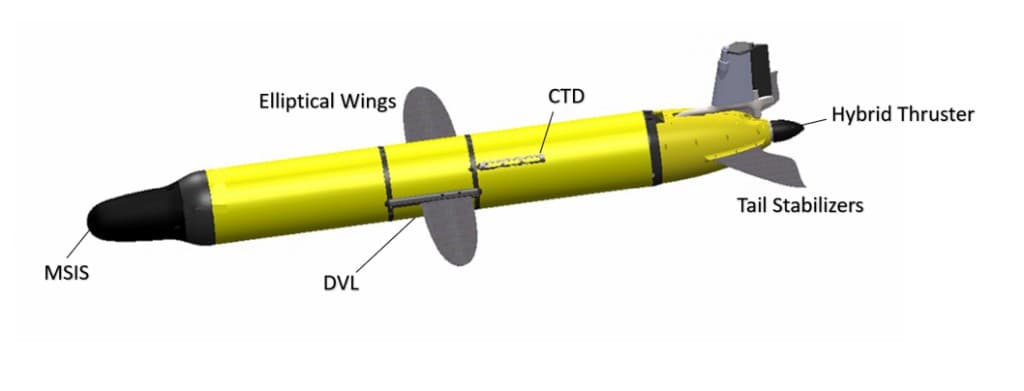
In this article, we present the design and test results of an autonomous underwater glider: Enhanced Propulsion Integrated Capability—Deep Autonomous Underwater Glider. This modified Slocum glider uses redesigned lifting surfaces and hybrid propulsion that are optimized for efficient operation in confined depth bands, deep water profiling, and adverse currents. Modeling suggests a maximum through-water velocity approaching 2 m/s and a theoretical maximum range up to 7000 km when equipped with a commercially available Li-ion rechargeable battery pack. Results indicate more than 30% improvement in glide efficiency and demonstrate the ability of this vehicle to operate equally well within ice-covered coastal regions and the deep ocean. These capabilities, combined with an improved navigation process, permit long-range and shore-launched missions with energy-intensive payloads.
Read paper →
This thesis presents an Autonomous Underwater Glider (AUG) architecture with improved onboard navigation and acoustics-based sensing intended to enable basin-scale unattended surveys of our Earth's most remote oceans. Traditional AUGs have long-been an important platform for oceanographic surveys due to their high endurance and autonomy, yet lack the operational flexibility to operate in many regions of scientific interest and the sensing capability to capture scientific data at the air-sea interface. Particularly of interest is the marginal ice zone (MIZ) in the Arctic and the Southern Ocean, as both are vitally important to understanding global climate trends, yet prohibitively expensive to persistently monitor with support vessels. To fill this observational gap, the sensing, navigation, and adaptability of AUGs must be improved. This is possible by employing onboard acoustic sensing for sea state observation and navigation, as well as incorporating vehicle improvements targeting maneuverability and intelligent adaptability to evolving environmental states. To enable persistent monitoring of both the water-column and air-sea interface, this thesis proposes an improved vehicle architecture for a more capable AUG, a real-time DVL-aided navigation process that leverages ocean current sensing to limit localization error, and a subsea acoustics-based sea state characterization method capable of analyzing wave spectra under-ice and with zero surface expression. These methods are evaluated with respect to extensive laboratory experiments and field data collected during in-situ implementation.
Read paper →
Officer Recruiter, Seattle, WA, 2026 - Present
Submarine Officer, Pearl Harbor, HI, 2022 - 2025
Graduate Student, May 2020 - Sep 2022
TypeScript, JavaScript, React, Next.js, Node.js, Python
PostgreSQL, Supabase, MongoDB
Docker, Amazon Web Services (AWS), CI / CD, API design